
A Guide to One of the World’s Most Revered Gemstones
What Is Jade?
“Jade” is a cultural and commercial term that refers to two distinct gemstones that have been treasured for thousands of years, especially in East and Southeast Asia:
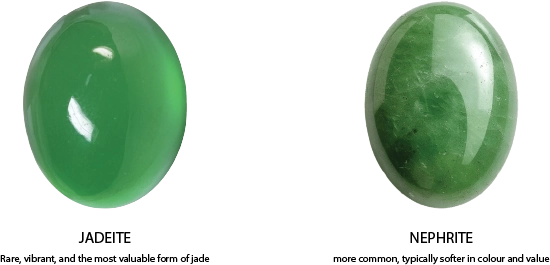
- Jadeite – rare, vibrant, and the most valuable form of jade
- Nephrite – more common, typically softer in colour and value
While both are beautiful, jadeite is the gemstone most associated with fine jewellery, imperial collections, and investment-grade pieces.
At Harmony, when we speak of jade, we primarily mean natural jadeite.
What Is Jadeite?
Jadeite is a sodium-aluminium silicate mineral formed under extreme
geological pressure. It is prized for its:
• Exceptional toughness
• Rich colour saturation
• Natural translucency
• Cultural symbolism of prosperity, protection, and longevity
High-quality jadeite is rarer than diamonds and has historically been valued
above gold in imperial China.
Main Types of Jadeite (By Colour)
Jadeite occurs in a wide spectrum of colours, each with its own character and value profile:
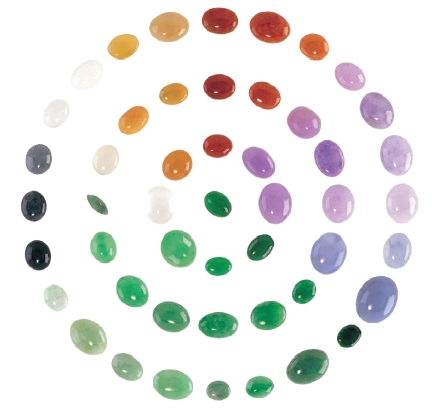 |
• Green Jadeite • Lavender Jadeite • White / Ice Jadeite • Yellow, Red & Orange Jadeite • Black & Dark Jadeite
|
Main Types of Jadeite (By Translucency)
Jadeite is also classified by translucency , which strongly affects value and appearance. The main types range from opaque (low-quality jade) → highly translucent (top-quality jadeite). Here are the commonly recognized categories:
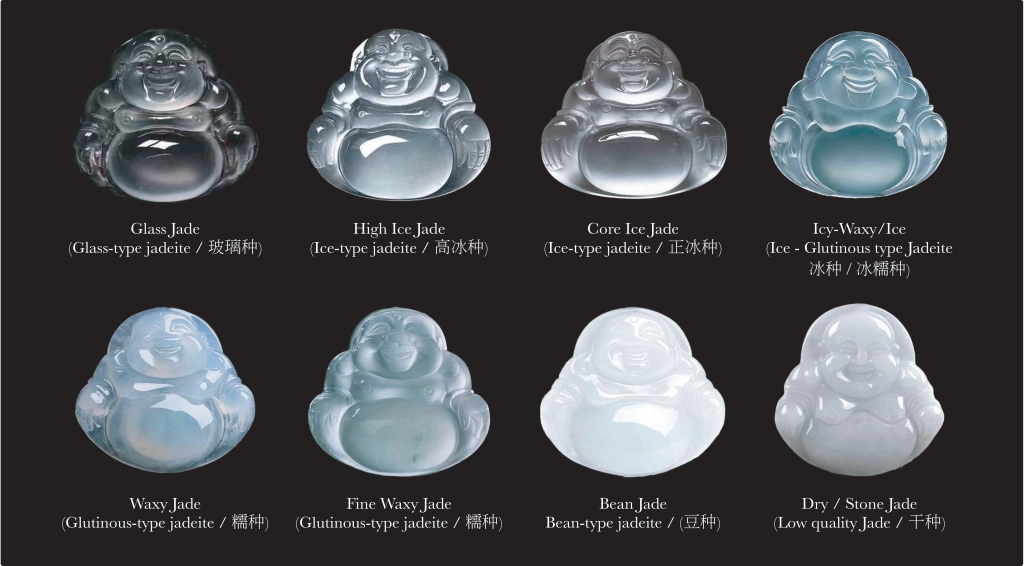
| 1. Glass Jade (Glass-type jadeite / 玻璃种) • Translucency: Almost transparent, like glass. • Appearance: Very clear, bright, and luminous with strong internal light. • Value: The most valuable type of jadeite. • Often seen in top-quality pieces from Myanmar jade mines. |
5. Waxy Jade (Glutinous-type jadeite / 糯种) • Translucency: Semi-translucent to cloudy. • Appearance: Looks like cooked glutinous rice or soft wax; light passes but is diffused. • Value: Moderate; very common in jewelry. |
| 2. High Ice Jade (Ice-type jadeite / 高冰种) • Translucency: Highly translucent but not fully transparent. • Appearance: Looks like clear ice—cool, glassier, smooth, with soft glow. • Value: Very high, second to glass jade. |
6. Fine Waxy Jade (Glutinous-type jadeite / 糯种) • Translucency: Semi-translucent to cloudy. • Appearance: Looks like cooked glutinous rice or soft wax; light passes but is diffused. • Value: Moderate; very common in jewelry. |
| 3. Core Ice Jade (Ice-type jadeite / 正冰种) • Translucency: Highly translucent but not fully transparent. • Appearance: Looks like clear ice—cool, more glassy, smooth, with soft glow. • Value: Very high, third to glass jade. |
7. Bean Jade (Bean-type jadeite / 豆种) • Translucency: Mostly opaque. • Appearance: Grainy structure resembling beans; rougher texture. • Value: Lower value but still used in everyday jewelry. |
| 4. Icy-Waxy / Ice (Ice-Glutinous type jadeite / 冰种 – 冰糯种) • Translucency: Between ice jade and waxy jade. • Appearance: Slightly misty but still bright and translucent. • Value: Upper mid-range to high depending on color. |
8. Dry / Stone Jade (Low quality Jade / 干种) • Translucency: Opaque. • Appearance: Dull, chalky, little internal light. • Value: Lowest grade for jadeite gemstones. |
Jadeite Classification (Based on Quality & Treatment)
Jadeite is commonly classified based on natural integrity and treatment methods, a system widely recognised in the gem trade and reflected in Harmony’s internal jadeite quality map:
Type A – Natural Jadeite (Highest Grade)
• 100% natural
• No chemical treatment or dye
• Only traditional waxing for surface protection
• The only type considered investment-grade
Harmony exclusively selects Type A jadeite for fine jewellery.
Type B – Treated Jadeite
• Chemically bleached and polymer-impregnated
• Improved clarity but compromised structure
• Lower durability and long-term value
Type C – Dyed Jadeite
• Artificial colour enhancement
• Colour may fade over time
• Lowest value category
How to Choose High-Quality Jadeite
Selecting jadeite is both an art and a science. Experts evaluate jadeite based on five core criteria:
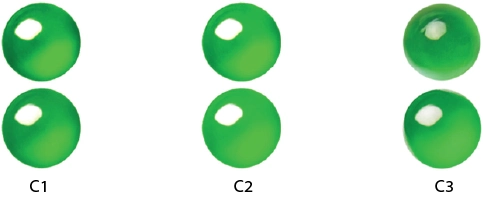
1. COLOUR
Vibrancy, purity, and even distribution. Natural, lively tones are most desirable.
2. TRANSLUCENCY
Higher translucency allows light to pass through the stone. “Water-like” glow is a key indicator of quality.

3. TEXTURE (GRAIN)
Fine, compact crystal structure. Smooth, refined appearance without coarse grains

3. CLARITY
Minimal inclusions, cracks, or cloudiness. Internal harmony enhances both beauty and durability
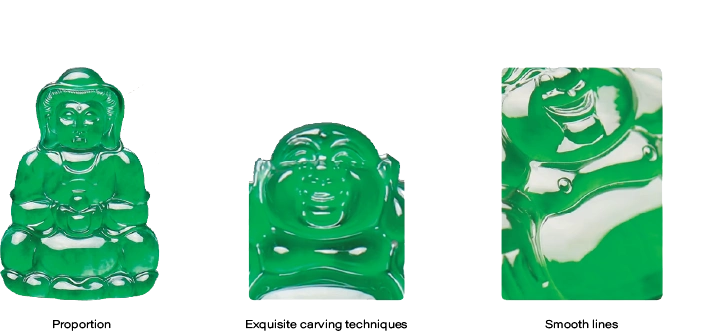
5. CRAFTSMANSHIP
Precision carving or cutting. Proportions that enhance the stone’s natural character
Why Choose Harmony Jadeite
At Harmony, jadeite is not just a gemstone — it is a heritage asset.
100% Type A Natural Jadeite
No chemical treatment, no dye — only authentic, untreated jadeite of the highest integrity.
Expertly Curated
Each piece is hand-selected for colour, translucency, texture, and overall harmony by experienced specialists.
Certified & Transparent
Reputable gemological certification accompanies every jadeite piece, ensuring trust and long-term value.
Timeless Design
Contemporary elegance grounded in cultural respect, crafted to be worn, treasured, and passed down.
We believe true luxury lies in integrity, restraint, and lasting beauty — qualities that fine jadeite embodies perfectly.